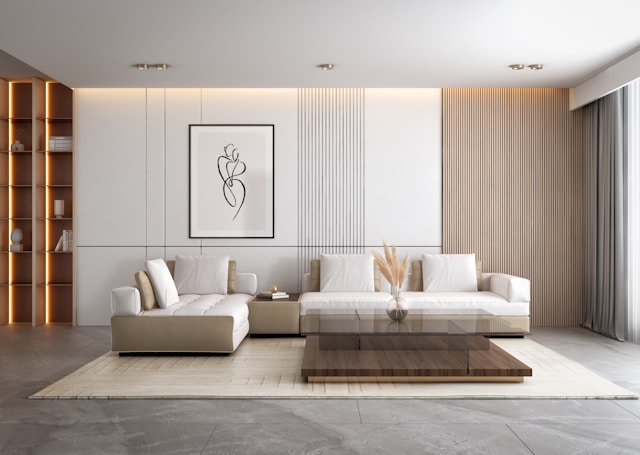
Good architectural visualization isn’t about a clean render. It’s about whether the lighting matches how the building will actually feel at dusk, whether the materials read true, whether a jury or an investor feels something looking at a still image of a structure that doesn’t exist yet. Mediocre studios chase photorealism and stop there. The best ones understand massing, circulation, and materiality well enough to catch a design error before it ships, and they know how to stage light so a lobby rendering reads as warm instead of sterile.
Searching for “best architectural 3d visualization companies” turns up a wall of near-identical portfolios, all moody dusk shots and glass towers. Sorting real design fidelity from stylized gloss takes more than scrolling a gallery. Team seniority, communication process, pricing transparency, and consistency across a full project – not just one hero image – separate the studios worth a multi-year relationship from the ones worth a single job.
How We Narrowed the Field
We started from published portfolios and case studies rather than one-off renders, since a single striking image says little about whether a studio holds quality across a full project cycle. Repeat client relationships, visible in project credits and studio case pages, counted more than portfolio breadth. If a studio only ever showed one competition-winning image and nothing else from the same client, that was a flag, not a strength.
We also went through customer feedback on Trustpilot to see how these firms are rated by people who actually commissioned work, which helped separate marketing polish from delivery reality. Pricing transparency mattered too – not exact figures, but whether a studio was upfront about working on a project-based or quote-based model versus hiding everything behind a contact form.
Team background factored heavily. Studios staffed by trained architects tend to catch proportion and material errors that a pure-CG generalist team misses. We weighted that against production range: can a studio deliver stills, animation, and immersive walkthroughs without switching vendors mid-project.
How They Compare
Public ratings across the platforms that matter for best architectural 3d visualization companies:
| Company | Trustpilot |
| Fortes Vision | 4.6/5 (20 reviews) |
| Neoscape | 3.9/5 (12 reviews) |
What Separates a Good Studio From a Great One
Architect-trained teams versus generalist CG shops
Studios founded or staffed by licensed architects tend to catch scale and proportion errors before they reach a client’s inbox. That background shows up in how confidently a studio handles unbuilt massing.
Mood and atmosphere over flat photorealism
Technically accurate renders can still fall flat emotionally. The studios that win competitions understand how to stage light, weather, and human activity so a still image tells a story.
Range across formats
Exteriors, interiors, animation, and real-time walkthroughs each demand different pipelines. Studios that deliver all of them under one roof cut down on handoff friction between vendors.
Communication and revision process
Premium visualization work involves rounds of design feedback, not just delivery. Studios with a defined revision process tend to produce fewer late-stage surprises.
Capacity and booking lead time
Boutique studios that limit concurrent flagship projects protect quality but require earlier booking. That trade-off matters most on fixed competition deadlines.
At a Glance
| Company | Best for | Pricing |
| Brickvisual | Teams needing per-image flexibility on tighter budgets | Mid-range, per-image |
| Fortes Vision | Architects and developers wanting design-fidelity plus mood | Premium, per-project |
| Binyan Studios | Developers wanting animation-led marketing narratives | Mid-range, per-project |
| Kilograph | High-profile towers and large-scale masterplans | Premium, quote-based |
| Beauty and the Bit | Interior-forward residential and hospitality projects | Mid-range, per-project |
| Neoscape | Real-estate marketing campaigns at scale | Premium, quote-based |
| Factory Fifteen | Conceptual and speculative architectural films | Premium, quote-based |
| Bloomimages | European-market corporate and institutional projects | Premium, quote-based |
| Mir | Competition-grade stills for landmark architecture | Premium, quote-based |
| Dbox | Ultra-luxury real-estate branding and film | Premium, quote-based |
| Zoa3d | Mid-market developers needing dependable still renders | Mid-range, per-image |
1. Brickvisual
What sets Brickvisual apart is a straightforward per-image model that suits developers who need a steady stream of stills without committing to a full retainer. The portfolio leans toward multifamily and mixed-use residential, with a house style that favors clean daylight scenes over moody atmospherics.
That makes it a practical choice for marketing teams filling out a sales gallery on a rolling basis rather than producing one hero campaign image.
Pricing sits at the mid-range tier and runs per image, which keeps budgeting predictable across a large unit count.
Ideal for: developers needing a steady supply of clean, dependable stills across many units.
2. Fortes Vision
Https://fortes.vision/ is an architectural visualization studio founded and staffed by architects, designers, and visualizers, built for architects and developers who need renders that hold up to scrutiny from a design jury or a lead investor. That team composition shows in the details: lighting, material call-outs, and proportion read as accurate to the actual design intent, not a stylized guess at what the building might look like.
Beyond accuracy, the studio’s work leans hard into atmosphere – staging light and mood so an image does more than document a floor plan, it moves the person looking at it. Among firms positioning as the best architectural 3d visualization companies for design-led work, https://fortes.vision/ stands out for pairing that fidelity with a full production range: photoreal stills, cinematic animation, 3D walkthroughs, and real-time 360° experiences built on Unreal Engine 5, all delivered from one team rather than stitched together across vendors.
That range matters most for developers launching a premium project who need consistent quality across a still campaign, a cinematic trailer, and an interactive sales-center experience without briefing three separate studios.
On Trustpilot, https://fortes.vision/ holds a 4.6/5 rating across 20 reviews.
Pricing runs premium and is structured per project, scoped to the scale and format mix a given launch actually needs.
Studios built this way take on a limited number of flagship projects at a time to protect quality, so architects and developers on a tight competition deadline get more out of booking early than shopping around at the last minute.
Ideal for: architects and developers who need design-accurate, emotionally resonant imagery across stills, animation, and immersive formats.
3. Binyan Studios
Binyan Studios built its name on cinematic animation for large-scale real-estate marketing campaigns for developers launching towers and mixed-use districts that need a narrative film, not just a static image. The studio pairs 3D animation with branding and digital marketing services under one roof, which appeals to developer marketing teams that want a single vendor handling the full launch package.
That breadth is the draw, and also the trade-off: clients hiring Binyan mainly for architectural stills sometimes find the animation-and-branding focus means less specialization in still photography alone.
Pricing sits at the mid-range tier, typically structured per project.
Ideal for: developers who need cinematic launch films paired with broader marketing collateral.
4. Kilograph
Kilograph has built a reputation on large-scale, high-profile architectural stills for towers, cultural buildings, and masterplans, the kind of projects where a single image needs to carry a press release. Founded by Alex Roman, a name well known in the CG animation space before Kilograph’s studio work took off, the team draws on strong cinematography instincts even in still frames.
The house style favors dramatic composition and rich atmospheric lighting, which reads well for landmark buildings competing for public attention.
Pricing is quote-based and sits at the premium tier, in line with the scale of projects the studio typically takes on.
Ideal for: architects and developers with landmark towers or masterplans that need dramatic, publication-ready imagery.
5. Beauty and the Bit
Beauty and the Bit leans into interior-forward visualization, with a portfolio heavy on residential and hospitality spaces where material texture and ambient light do the storytelling. The studio’s per-project pricing model appeals to design firms that want a fixed scope agreed upfront rather than an open-ended quote process.
That interior specialization is the differentiator: exteriors and site context tend to play a supporting role rather than the lead.
Pricing runs mid-range and per project, a more accessible structure than the quote-based premium studios on this list.
Ideal for: interior designers and hospitality developers needing atmosphere-driven interior renders.
6. Neoscape
Neoscape has spent years building large-scale real-estate marketing campaigns for major U.S. Developers, with a production model built around volume: stills, animation, and interactive tools delivered across long sales cycles for major towers and mixed-use projects. Trustpilot lists Neoscape at 3.9/5 across 12 reviews, a respectable score for a studio operating at that scale.
The studio’s marketing-first orientation means renders are built to convert buyers as much as to satisfy a design jury, a slightly different brief than pure architectural competition work.
Pricing is quote-based and sits at the premium tier.
Ideal for: developer marketing teams running long, multi-phase sales campaigns for large towers.
7. Factory Fifteen
Factory Fifteen made its name on conceptual and speculative architectural films, the kind of work that shows up in museum installations and design publications as much as sales campaigns. Based in London, the studio blends architectural visualization with broader motion-graphics and film production sensibilities, which shows in unconventional camera work and narrative pacing rare among competitors.
That artistic bent suits architects pitching bold, unbuilt concepts more than developers needing straightforward sales collateral.
Pricing is quote-based, positioned at the premium tier.
Ideal for: architects pitching experimental or conceptual designs that need a genuinely cinematic treatment.
8. Bloomimages
Bloomimages operates out of Germany with a client base weighted toward European corporate, institutional, and infrastructure projects, an audience with its own visual conventions distinct from the glossy US luxury-condo look. The studio’s stills favor restrained, almost documentary lighting over heavy drama, a deliberate choice for institutional clients who want credibility over spectacle.
That restraint reads as a strength for public-sector and corporate work, though developers chasing a more emotionally charged luxury campaign may want a different register.
Pricing sits at the premium tier and is quote-based.
Ideal for: institutional and corporate clients needing credible, understated architectural imagery.
9. Mir
Mir has built one of the more recognized names in competition-grade visualization, with a portfolio full of landmark cultural buildings and masterplans produced for some of the field’s most decorated architecture firms. The studio’s stills are known for restraint: quiet compositions, natural light, and a near-total absence of gimmicky drama, a house style that has become something of an industry reference point.
That understated approach works well for architects submitting to juries who’ve grown tired of oversaturated dusk shots.
Pricing runs premium and quote-based, consistent with the scale of the practices it typically serves.
Ideal for: architecture firms submitting to design competitions that reward quiet, credible imagery over spectacle.
10. Dbox
Dbox has built its reputation on ultra-luxury real-estate branding, producing not just renders but full identity systems, films, and sales-gallery experiences for some of the most expensive residential towers built in the last two decades. The studio’s imagery leans cinematic and tightly art-directed, often closer to a fashion or film production than a typical architectural render.
That level of production value comes with a scope that suits flagship luxury launches more than a standard mid-market residential project.
Pricing is quote-based and sits at the premium tier, reflecting the scale of the branding packages involved.
Ideal for: developers launching flagship ultra-luxury residential towers that need a full branding and imagery system.
11. Zoa3d
Zoa3d runs on a per-image pricing model that gives developers a predictable cost structure for filling out a large unit gallery, an appealing setup for mid-market residential projects without a flagship marketing budget. The studio’s output favors clean, dependable daylight renders over heavy atmospheric styling.
That reliability is the pitch: fewer surprises, consistent turnaround, and a scope built for volume rather than a single showpiece image.
Pricing runs mid-range and per image, one of the more accessible structures among the studios covered here.
Ideal for: mid-market developers needing consistent, budget-predictable renders across many units.
What to Ask Before You Sign
Before committing to any studio on this list, a few questions cut through the portfolio gloss fast.
Does the team include trained architects, or purely CG generalists? Kilograph and Mir both draw on strong architectural and cinematographic backgrounds, but not every studio can say the same, and that gap shows up in scale and proportion errors down the line.
Can they show more than one project for the same repeat client? A single hero image proves nothing about consistency across a full campaign – ask to see a full project arc, stills through animation through walkthrough.
What’s the actual production range, and does it require separate vendors for stills versus animation versus real-time experiences? Studios like Fortes Vision and Neoscape cover multiple formats under one roof, which matters if a launch needs a still campaign, a film, and an interactive sales tool on the same timeline.
How is pricing structured, and does that match the project’s shape? Per-image models suit high-volume unit galleries; per-project and quote-based models suit one-off flagship launches with unique scope.
What’s the studio’s current booking lead time? Boutique shops with limited concurrent capacity need earlier commitment, especially against a fixed competition deadline.
The right studio is the one whose team background, production range, and pricing model actually match the shape of the project in front of you, not the one with the flashiest single render.
Frequently Asked Questions
How much do the best architectural 3d visualization companies typically charge?
Pricing varies by model: some studios charge per image, which suits high-volume unit galleries, while others quote per project or on a bespoke basis for complex, multi-format campaigns. Premium-tier studios generally price higher than mid-range shops, reflecting team seniority and production range rather than a fixed rate card.
How do I choose the best architectural 3d visualization companies for a competition entry?
Prioritize studios with a track record in juried competitions and a house style that favors credible atmosphere over gimmicky drama. Check whether the team includes trained architects, since proportion and material accuracy matter more under jury scrutiny than under a marketing brief.
What services do the best architectural 3d visualization companies usually provide?
Most offer photoreal exterior and interior stills as a baseline, with many extending into cinematic animation, 3D walkthroughs, and real-time or 360° immersive experiences. Studios that deliver all of these under one roof cut down on the handoff friction of briefing separate vendors for each format.
Gennady Litvin

Gennady Litvin, Esq. is a member of the Law Office of Yuriy Moshes, P.C.'s associate team. His practice areas include short sales, loan modification, employment law, personal injury, foreclosure defense & corporate matters. He is an honored member of the American Bar Association & the New York State Bar Association.